
What is PCR cosmetic packaging? Post-Consumer Recycled (PCR) packaging is made from end-consumer plastic waste—such as recycled water bottles and milk jugs that has been collected, sorted, and processed into new high-quality materials.
Using GRS-certified PCR plastic reduces reliance on virgin petroleum materials, lowers carbon footprint, and directly aligns with EU and UK eco-compliance regulations.
Common materials used in PCR cosmetic packaging include PCR PET, PE, and increasingly PCR PP (Polypropylene)—which has become the preferred eco-friendly alternative in the European market.
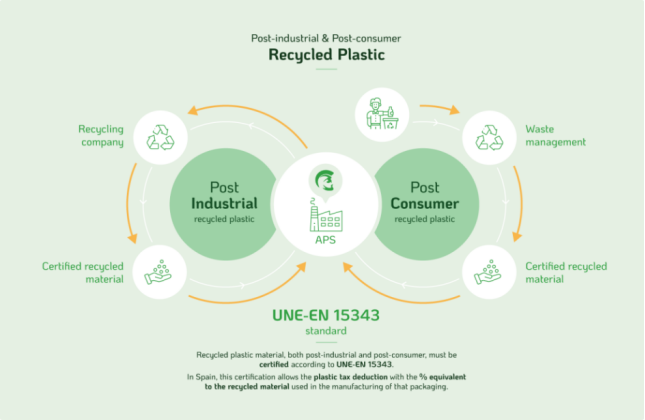
Understanding Recycled Materials: PCR vs. PIR in Packaging
Recycled plastic packaging generally falls into two distinct categories based on its waste source. Both alternatives reduce virgin material consumption, but they serve different roles in your supply chain:
- PCR (Post-Consumer Recycled):
Originates from everyday consumer waste. It closes the circular economy loop by diverting used packaging from landfills.
- PIR (Post-Industrial Recycled):
Sourced from factory-level manufacturing scrap, such as trimmings and defect molds generated during production.
PCR Cosmetic Packaging: Benefits & Strategic Value for Beauty Brands
Integrating PCR packaging into your cosmetic product lines provides measurable market advantages:
- Regulatory Compliance:
Easily meets emerging global mandates, such as the UK Plastic Packaging Tax and EU PPWR (Packaging and Packaging Waste Regulation) targets.
- Consumer Demand:
Over 67% of global beauty consumers actively prefer brands using eco-friendly, recyclable packaging solutions.
- Competitive Differentiation:
Helps beauty brands build a strong corporate sustainability narrative while avoiding greenwashing risks.
Technical Note on PCR Ratios:
100% PCR plastic is not always necessary or ideal. Because recycled polymer chains degrade slightwith each recycling cycle, professional manufacturers typically offer tailored 10% to 50% PCR blends to guarantee structural integrity, color consistency,
and formula compatibility.
Certifications Matter: GRS & Quality Control for Cosmetic PCR Bottles
Not all PCR packaging resins meet the strict safety standards required for beauty and skincare products. To ensure formula stability and batch consistency,
look for suppliers with verifiable certifications:
- Global Recycled Standard (GRS):
Verifies the full chain of custody, eco-friendly processing, and exact recycled content percentage from source to final bottle.
- UNE-EN 15343:
European standard ensuring complete traceability and quality management of recycled plastics
PIR Packaging: Repurposing Industrial Scrap
Post-Industrial Recycled (PIR) material comes directly from clean manufacturing scrap before it ever reaches consumers.
Because PIR material is collected in controlled factory environments, it features higher material purity and superior color consistency compared to raw PCR.
While PIR does not directly divert consumer waste, it represents an cost-effective step toward reducing industrial waste.
Looking for GRS-certified PCR packaging solutions for your cosmetics line? Contact Our Packaging Experts today.